• Skip to primary navigation
  • Skip to main content
  • Skip to primary sidebar
Avinash Meetoo

Avinash Meetoo

Let us build a Smart Mauritius together

  • Home
  • About
  • Curriculum Vitae

Finance

Thirty women entrepreneurs of Mauritius and Rodrigues help us devise an optimal way to become financially literate

21 March 2023 By Avinash Meetoo Leave a Comment

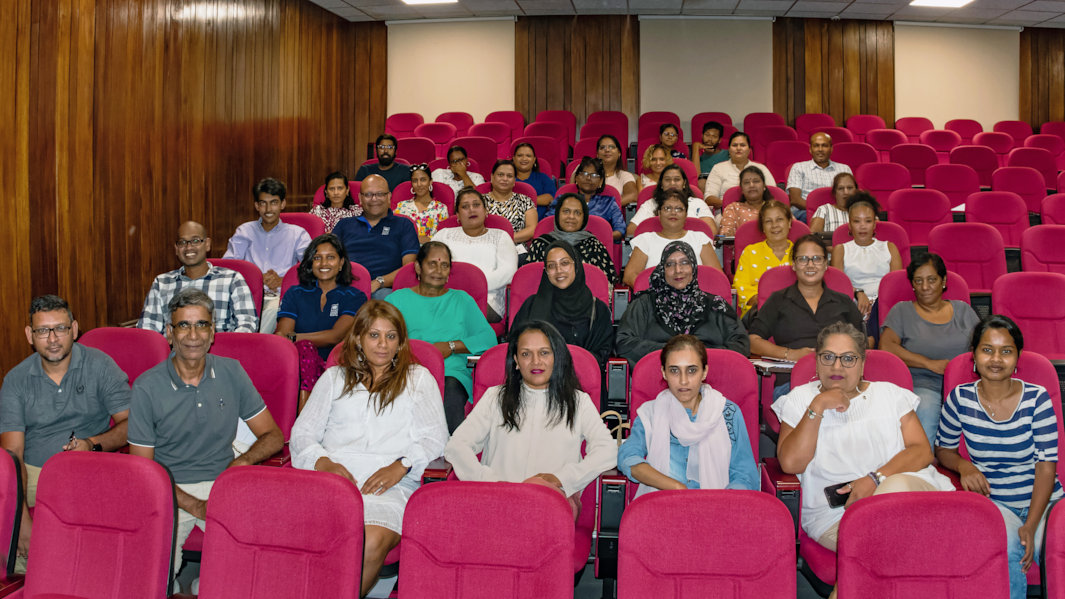
(Women entrepreneurs participating in a Financial Literacy experiment. Photo: UNDP.)

On Saturday 11 February 2023, more than thirty women entrepreneurs of Mauritius converged towards the University of Mauritius to join a financially literacy experiment devised by the UNDP Mauritius and Seychelles Accelerator Lab.

A little more than one year ago, the UNDP Mauritius and Seychelles organised a collective intelligence exercise with women entrepreneurs from the Micro, Small and Medium Enterprises (MSMEs) of Mauritius and Rodrigues. We discovered that one of their major concerns was that many of the women entrepreneurs felt that they did not have a good understand of finance. As such, many were struggling to remain compliant with institutions such as the Mauritius Revenue Authority and, in general, making sound financial decisions for their respective private companies.

After discussing with my Accelerator Lab colleagues, I proposed to run an experiment to test the following hypothesis: that any women entrepreneurs of Mauritius and Seychelles, with or without any prior knowledge of finance, could learn basic finance through short videos in Mauritian Creole and participation in a peer-to-peer online learning platform.
It took some time to procure a service provider with proven experience in finance, in the creation of educational videos and in engagement with women entrepreneurs in small businesses. At the end, a team from the University of Mauritius was selected. Partners for this experiment include SME Mauritius and the Mauritius Women Entrepreneurs Council who agreed share part of their extensive database of women entrepreneurs of Mauritius and Rodrigues with UNDP.

First meeting with the university professors
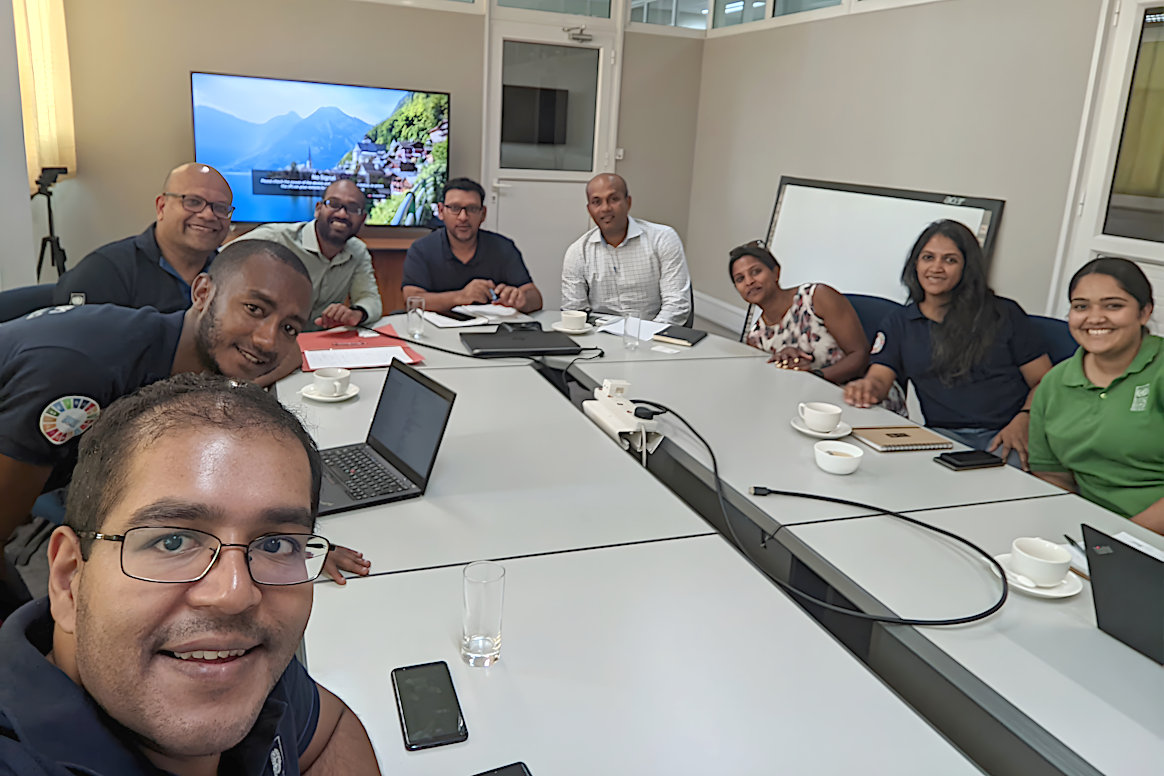
(UNDP Accelerator Lab and university academics. Source: UNDP.)

Our first meeting with the team of academics which had been selected took place on Thursday 20 October 2022. Professor Boopen Seetanah, Dr Goonesh Bahadur and Dr Viraiyan Teeroovengadum from the University of Mauritius were present as well as all three heads of the Accelerator Lab and our three UN Community Volunteers from Mauritius and Rodrigues.

We spoke about our expectations and the various deliverables and their deadlines. We focused on the content and ownership of the videos to be produced. During the conversation, we came up with a tentative list of topics to be covered including financial management, financial reporting and financial analysis. We also chose other topics such as working capital management and pricing.

Of course, we knew that it would be better to ask actual women entrepreneurs to tell us what they really require as new knowledge. Therefore, we decided to constitute several focus groups consisting of both established and beginner women entrepreneurs. In this way, we thought that the topics would be useful for a more varied audience.

Women entrepreneurs help identify the topics to cover
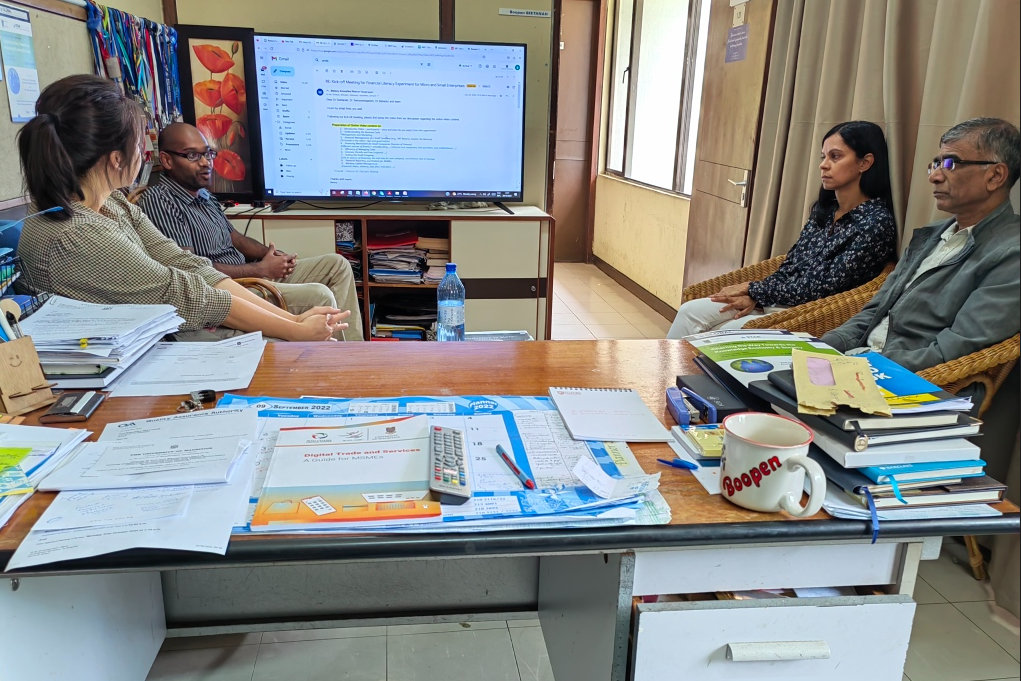
(A focus group meeting. Source: UoM.)

The team from the University of Mauritius met with different groups of women entrepreneurs over a period of two weeks and, from their interaction, came up with the following list of topics to be covered during the training:

  • Understanding the Business Cycle
  • Understanding Financial Statements
  • Financial Statements Analysis
  • Working Capital Management
  • Budgeting and Investment Appraisal
  • Costing and Cost Classification
  • Statutory Compliance

From there, the university team wrote the script for the videos, identified the people who would speak, designed the images, charts and animations to be used and embarked on the video recording and editing process.

We had earmarked one month but this took three times more as there was always an aspect of the videos to fine-tune. The videos were finally ready at the end of January 2023 and the University of Mauritius team transferred the ownership to UNDP. Even though the experiment had been delayed the experiment by additional weeks, this was time well spent as, at the end, UNDP had about 12 videos of about 10 minutes each on finance literacy, all uploaded on a specific Youtube channel.

Thirty women entrepreneurs join the financial literacy experiment

(Engaging with 30 women entrepreneurs for the Financial Literacy experiment. Source: UNDP.)

On Saturday 11 February 2022, more than 30 women entrepreneurs went to the University of Mauritius for a first face-to-face meeting with the UNDP Accelerator Lab and the University of Mauritius teams. The entrepreneurs were very enthusiastic to have been contacted by the academics and were really keen to understand how the experiment would be conducted and what they were expected to achieve at the end.

Avinash Meetoo and Ayooshee Dookhee from the UNDP Accelerator Lab explained why the experiment was conceived, how, should the women entrepreneurs prove the experiment to be successful, this mode of learning could be deployed on a wider basis across the country, etc. The academics explained that, on that day, the women entrepreneurs would undergo a baseline test to evaluate their existing level of financial literacy.

The academics then explained that, during the subsequent two months, the women entrepreneurs would learn about financial literacy by watching the YouTube videos at their own pace. Of course, the women would be able to pause, rewind and watch the videos as many times as they wanted. They would also be in online forums where they would be able to interact with their fellow learners as well as the academics.

The academics finally explained that the women entrepreneurs would do a final evaluation at the end of the two-months period in order to verify whether this novel mode of learning through videos in Mauritian Creole was successful or not. All women entrepreneurs would also obtain a certificate of completion at the end of the experiment.
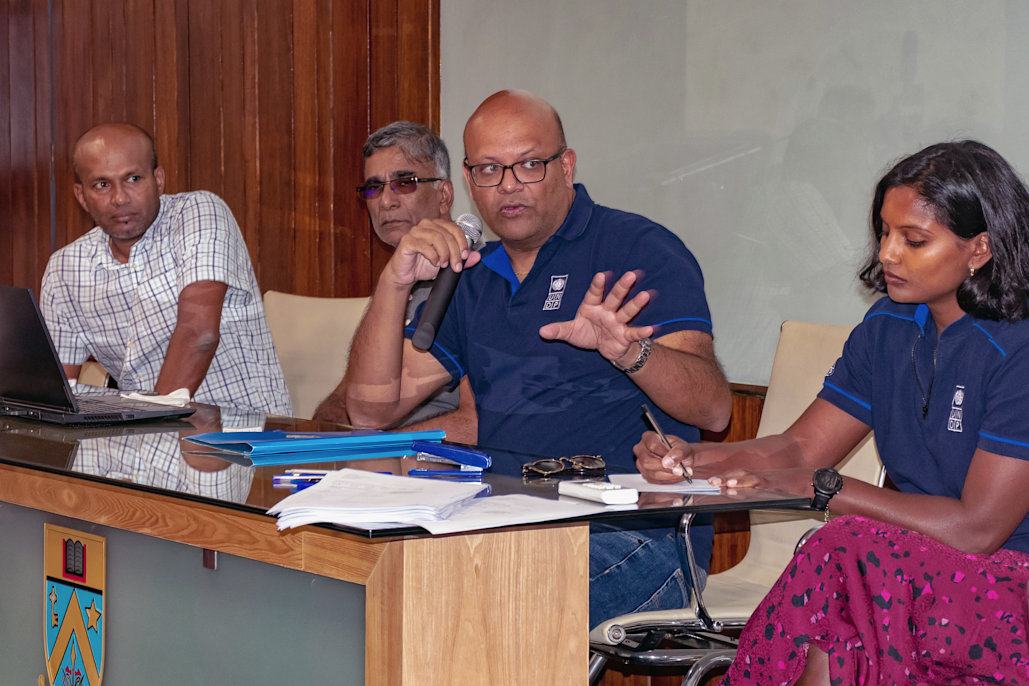
(Avinash Meetoo and Ayooshee Dookhee from the UNDP Accelerator Lab with two university professors. Photo: UNDP.)

The next steps

There is one month left for the experiment. Up to now, user engagement has been good and there is a lot of interaction online, especially in a WhatsApp group with all the women entrepreneurs and the academics. WhatsApp has proved to be more practical that other kinds of communication tools.

The experiment will conclude by mid-April with a final report to be submitted by the University of Mauritius team and an award ceremony for the thirty participants.

Watch this space!

(This blog was written with the contributions of Dr Boopen Seetanah, Professor of International Trade, Finance and Development Economics at the University of Mauritius, Dr Kesseven Padachi, Professor of Accounting and Finance at the University of Technology Mauritius, Dr Goonesh Bahadur, Senior Lecturer and Officer in Charge of hte Centre for Innovative Lifelong Learning (CILL) at the University of Mauritius and Dr Viraiyan Teeroovengadum, Senior Lecturer in Management at the University of Mauritius. Many thanks also to Ayooshee Dookhee and Melany Poorun-Sooprayen, my two colleagues of the UNDP Accelerator Lab. Finally, I would also like to thank our three UNVs: Shabbir Ismael, Medaavi Gopaul and Jean-Wendy Gaspard.)

If you’re interested to partner with the UNDP Mauritius and Seychelles Accelerator Lab for this experiment or any other project, please reach out to us at
(Engaging with 30 women entrepreneurs for the Financial Literacy experiment. Source: UNDP.)

Filed Under: Education, Finance, Future, News, Society, Technology

What is high inflation and what can we do?

3 May 2022 By Avinash Meetoo Leave a Comment

Inflation is rising all over the world

I am not an economist but I have a family and it is important for us to be financially literate and sound. I have been hearing, for the past few months, that inflation is rising all over the world and is currently at 6.3% in Mauritius according to my own calculations. The last time the rate of inflation was that high in Mauritius was in 2011, eleven years ago.

I am trying to understand what effects a rising inflation will have on the country’s economy but also the economy of a typical household. I am doing that by reading a lot of articles online, watching relevant videos on YouTube as well as participating in a few selected online forums.

Why inflation is so high?

As observed in an article in The Conversation, the population generally feels that COVID-19 is under control and are going out and consuming / purchasing more now.

People are using their own savings made during the pandemic but also the stimulus checks and other pandemic-related aid they obtained from Government.

In some countries, because of the Great Resignation currently happening, companies have had to increase salaries to retain their departing staff. This contributes to an increasing inflation. I don’t think that salaries are increasing in Mauritius yet but I might be wrong…

Consequently, as demand is increasing, sellers are increasing the prices for products and services (and this is what inflation basically is).

The disruptions in shipping and logistics are also contributing to increased prices. There are also chip shortages for important electronic products.

Why high inflation is bad?

High inflation means high prices and poor people will start having difficulties. This is already happening in many countries and can give rise to social unrests.

Companies also suffer when inflation is high as they buy their raw supplies at higher prices. They are forced to sell at a higher price too to keep their profitability (or they need to lower their expectations or decrease production).

If inflation continues increasing, then there is the risk of hyperinflation. This has happened in the past in a few countries.

How does central banks limit inflation?

The best way to control inflation is to incite people and companies not to consume or purchase too much. The way to do that is to increase the interest rates on savings in banks.

Right now, it is around 0.4% per year in Mauritius and, with a 6.3% inflation rate, people have (nearly) zero incentive to save. Better use the money, which will be worth 6.3% less next year, and get the latest car or TV, they say.

The central banks will surely decide to increase the interest rate on savings this year. Of course, people will save more and, hence, the economy will slow down. Similarly, borrowers will have higher interest rates to pay which will also incite them not to borrow too much thereby slowing down the economy even more.

But slowing the economy too much is as dangerous as letting prices increase.

Central banks will definitely have to be careful in their approach.

I am trying to understand what to invest in (securely) in times of high inflation. I will write a post on that. Meantime, please free to offer your suggestions in the comments section.

Filed Under: Education, Finance, Future, News, Society

Financial literacy: an experiment to empower women entrepreneurs of Mauritius and Rodrigues

21 January 2022 By Avinash Meetoo 1 Comment

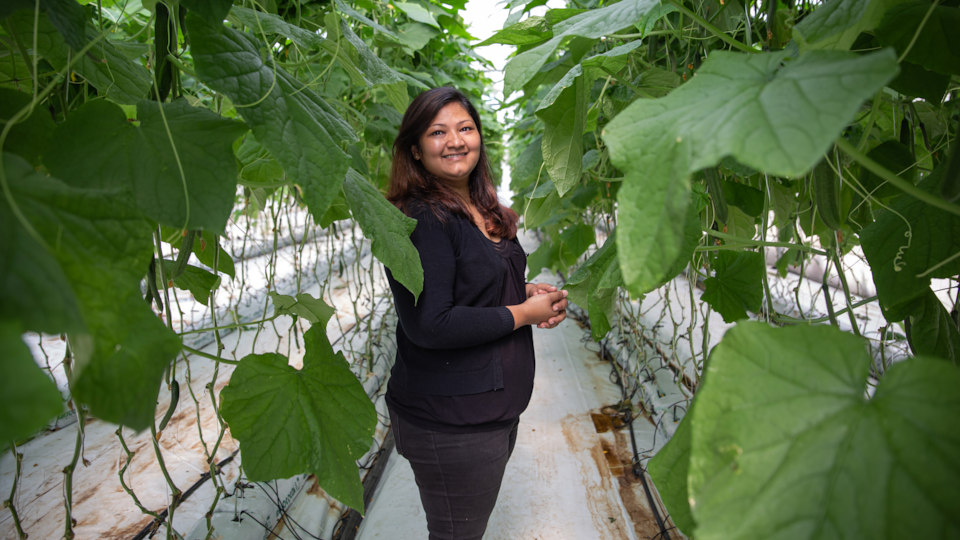
Woman entrepreneur and hydroponic farmer in Mauritius

Women entrepreneurs are contributing greatly to the resilience of the country and there are good reasons to believe that they could contribute even more. The UNDP Mauritius and Seychelles Accelerator Lab plans to test the hypothesis that women, irrespective of their knowledge of finance, can run their businesses better after accessing financial literacy material.

The collective intelligence exercise organised by the lab on 17 June 2021 revealed that one of the biggest concerns of owners of Micro, Small and Medium Enterprises (MSMEs) in Mauritius and Rodrigues was a lack of financial literacy. Establishing and operating a business involves complex financial and administrative operations, and many small business owners struggle with documents that require some knowledge of accounting or finance. As a result, small enterprises tend to operate in a “financial fog”, struggle with procedures, and are susceptible to making irrational decisions.

Experimenting self-paced financial literacy training for women-led MSMEs

Many of the small businesses in Mauritius and Rodrigues are operated by women. In some cases, these women entrepreneurs have a limited knowledge of finance. Improving the financial literacy of these women entrepreneurs is undoubtedly critical for enhancing the viability of their businesses. While formal training, to which enterprises already contribute a training levy to the Human Resource Development Council, could be a solution, small businesses encounter difficulties releasing their limited staff to full-time sessions. For women, this kind of training is also impeded by domestic responsibilities such as child care. Another factor playing against formal training is the ongoing COVID-19 pandemic, which has made face-to-face training practically impossible.

The UNDP Mauritius and Seychelles Accelerator Lab considers that self-paced online training on financial literacy could enable MSME owners to improve the management of their businesses more efficiently. Through simple online videos delivered in Mauritian Creole on precise finance topics, and an online forum to facilitate peer-to-peer learning, many Mauritian women entrepreneurs could benefit from a more flexible solution towards improving their financial knowledge.

The Accelerator Lab plans to explore and test the efficiency of this self-paced online training solution with the participation of 15 women entrepreneurs from Mauritius and Rodrigues. This experiment, to be held with the collaboration of an educational institution and tax and business authorities, will include 15 women entrepreneurs from Micro, Small and Medium Enterprises (MSME) of Mauritius and Rodrigues.

The proposed experiment will require the following:

  • A person who is responsible for making financial decisions in a women-led MSME (typically, the owner) performs an initial Financial Literacy test online.
  • The person then has access, for a duration of three months, to short videos delivered in Mauritian Creole on various financial aspect of running a business.
  • During this period, all trainees will have the possibility to interact through an online learning platform, as a means towards peer-to-peer learning.
  • At the end of the three months, the person undergoes a similar test as at the beginning to evaluate her progress.

The Accelerator Lab wants to demonstrate that these women will be better equipped to run a profitable business as they would have acquired new knowledge and skills in finance.

We believe that MSMEs, with leaders who have a better grasp of finance, have a better chance of succeeding and, therefore, contribute to the development of the country. Such MSMEs also can create more jobs which is desirable in this COVID-19 context.

The next step

After consultations with potential stakeholders, including women entrepreneurs, the Accelerator Lab is in the process of identifying a partner to run this experiment during the first quarter of 2022.

The partner will be responsible to conduct the tests and create the multimedia content as well as provide the online learning platform. It will have to ensure that the videos created are straightforward to understand and really useful to small business owners. In other words, this experiment is not an academic experiment but rather an opportunity for women entrepreneurs to better run their companies and thus attain new heights. With 52% of its population being women, the Republic of Mauritius has all to gain by empowering its women entrepreneurs.

Women MSME owners who would like to be considered for this experiment, can contact the Accelerator Lab team. Individuals, public or private organisations willing to partner with UNDP to conduct this experiment are also encouraged to contact the team.

Filed Under: Computing, Education, Finance, Future, News, Society, Technology

  • « Go to Previous Page
  • Page 1
  • Page 2
  • Page 3
  • Page 4
  • Page 5
  • Page 6
  • Interim pages omitted …
  • Page 9
  • Go to Next Page »

Primary Sidebar

Search

I am proud of

My family
My company
My music
My photos

I am active on

Facebook
FB Page
Twitter
LinkedIn
Reddit
Hacker News
Stack Overflow
GitHub
Wikipedia
YouTube
IMDB
Last.fm

All posts

  • April 2026 (3)
  • February 2026 (2)
  • January 2026 (2)
  • October 2025 (4)
  • September 2025 (1)
  • June 2025 (2)
  • April 2025 (1)
  • March 2025 (1)
  • February 2025 (2)
  • January 2025 (4)
  • December 2024 (4)
  • November 2024 (2)
  • October 2024 (1)
  • September 2024 (4)
  • July 2024 (1)
  • June 2024 (1)
  • May 2024 (4)
  • March 2024 (1)
  • February 2024 (1)
  • January 2024 (1)
  • December 2023 (2)
  • November 2023 (2)
  • October 2023 (2)
  • August 2023 (2)
  • July 2023 (3)
  • June 2023 (3)
  • May 2023 (4)
  • April 2023 (1)
  • March 2023 (3)
  • January 2023 (1)
  • December 2022 (1)
  • November 2022 (5)
  • September 2022 (2)
  • June 2022 (2)
  • May 2022 (1)
  • April 2022 (1)
  • January 2022 (3)
  • November 2021 (1)
  • September 2021 (1)
  • June 2021 (3)
  • April 2021 (1)
  • February 2021 (1)
  • January 2021 (2)
  • November 2020 (1)
  • October 2020 (1)
  • September 2020 (1)
  • August 2020 (1)
  • May 2020 (1)
  • April 2020 (3)
  • March 2020 (4)
  • January 2020 (1)
  • July 2019 (1)
  • June 2019 (1)
  • April 2019 (2)
  • January 2019 (1)
  • December 2018 (3)
  • November 2018 (1)
  • September 2018 (1)
  • August 2018 (1)
  • April 2018 (1)
  • December 2017 (1)
  • November 2017 (1)
  • October 2017 (1)
  • August 2017 (1)
  • July 2017 (1)
  • May 2017 (1)
  • March 2017 (1)
  • February 2017 (1)
  • August 2016 (1)
  • July 2016 (1)
  • June 2016 (3)
  • April 2016 (3)
  • March 2016 (3)
  • February 2016 (1)
  • December 2015 (1)
  • November 2015 (1)
  • October 2015 (1)
  • August 2015 (5)
  • June 2015 (1)
  • September 2013 (2)

Copyright © 2026 by Avinash Meetoo · Shared under an Attribution 4.0 International Creative Commons license · Log in